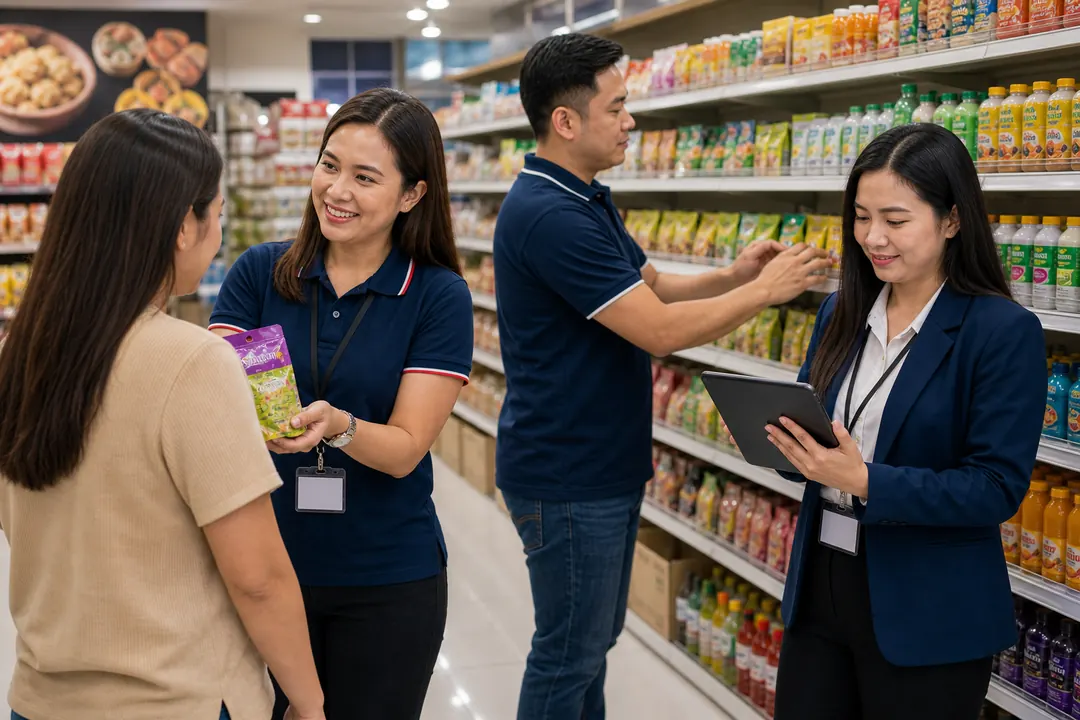

Retail staffing succeeds when every store has the right person, at the right hours, with the right product and customer knowledge. Employers need clear roles, realistic coverage, dependable attendance, and a replacement process that protects launches and promotions.
Choose the right role
Merchandiser
Focuses on stock checks, replenishment, displays, rotation, prices, promotional materials, out-of-stocks, and store coordination.
Promodiser
Combines presentation with customer engagement, demonstrations, feature explanations, promotions, and sales or feedback reporting.
Sales clerk or store support
Assists customers, maintains the selling area, replenishes items, organizes stock, and follows procedures.
Coordinator
Monitors attendance, coverage, reports, display compliance, concerns, replacements, and communication across branches.
Build a coverage plan
List stores, hours, peak traffic, promotions, deliveries, reporting deadlines, and minimum coverage. Decide whether each site needs fixed staffing, peak-hour coverage, weekend support, or roving visits. Include travel and access rules. Article 38 explains multi-branch planning.
Screen for the real environment
Ask candidates to explain a product, arrange a display, respond to a customer, count stock, or complete a report. Assess communication, reliability, attention to detail, schedule fit, and ability to follow rules. Product knowledge can be trained; honest availability matters.
Onboard before assignment
- Product essentials and permitted claims.
- Store access, dress code, and contacts.
- Display, replenishment, rotation, and price checks.
- Customer service and complaint escalation.
- Attendance, breaks, schedule changes, and replacements.
- Reports, privacy, and store rules.
Measure execution
Track attendance, opening coverage, display compliance, shelf availability, replenishment, promotion setup, report timeliness, customer feedback, issue resolution, and replacement time. Interpret sales carefully because price, stock, promotions, and foot traffic may be outside worker control.
Plan peaks and replacements
Share holiday, opening, launch, and event dates before the peak. Keep trained backups for critical sites and record qualifications. Read Article 2 on retail roles.
Create a retail operating cadence
Before each week, confirm store schedules, promotions, deliveries, product priorities, reporting deadlines, and approved substitutions. Each worker should know the store contact, provider coordinator, and escalation path. Coordinators need enough travel time to observe work, coach people, and close issues instead of spending the day collecting attendance manually.
Use one simple reporting standard across locations. A useful report may include attendance, opening condition, shelf availability, display compliance, stock concerns, customer feedback, promotion status, competitor observations where permitted, and actions needed. Collect only photos and information allowed by store and privacy rules.
Prepare for campaign launches
- Freeze the store list and schedule before recruitment closes.
- Provide product samples or training materials early.
- Define selling claims, prohibited claims, and escalation for technical questions.
- Confirm stock and promotional materials before measuring worker execution.
- Train backup workers on the same products and reporting process.
- Set a daily launch call for the first several days.
At campaign close, compare planned versus actual coverage, sales-support results, stock availability, store feedback, attendance, replacements, and worker feedback. Capture lessons before the next launch instead of rebuilding the process each time.
Protect consistency across branches
Provide a short visual standard for displays and customer engagement, then allow documented exceptions for store format and local rules. Spot checks should be used for coaching and verification, not only fault finding. When one location performs better, identify the process that can be repeated elsewhere.
Frequently asked questions
What is the difference between a merchandiser and promodiser?
A merchandiser concentrates on availability, displays, and reporting. A promodiser also engages customers and supports promotion or selling.
How do I calculate staffing by store?
Use store hours, traffic, promotions, deliveries, workload, coverage, breaks, days off, and travel.
What should workers learn?
Cover products, store rules, displays, customer service, reporting, attendance, privacy, safety, and escalation.
How should absences be handled?
Define notification cutoffs, backup qualifications, store access, client approval, replacement targets, and schedule communication.