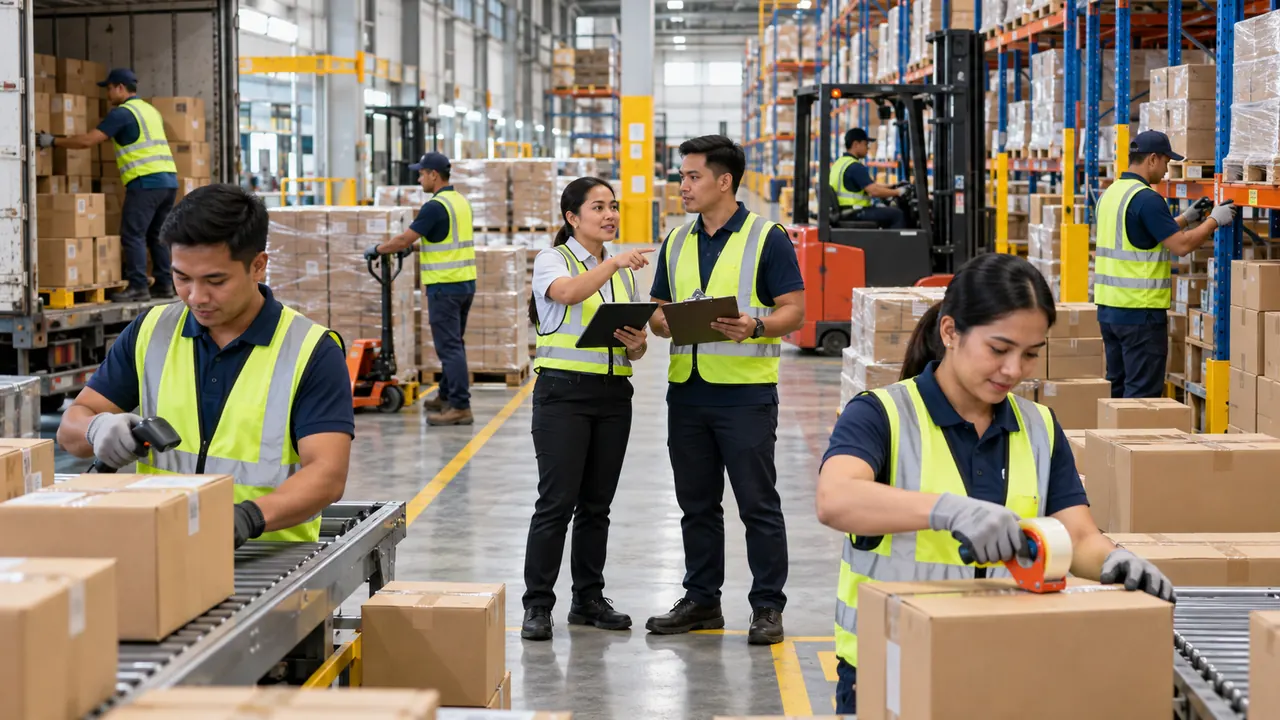
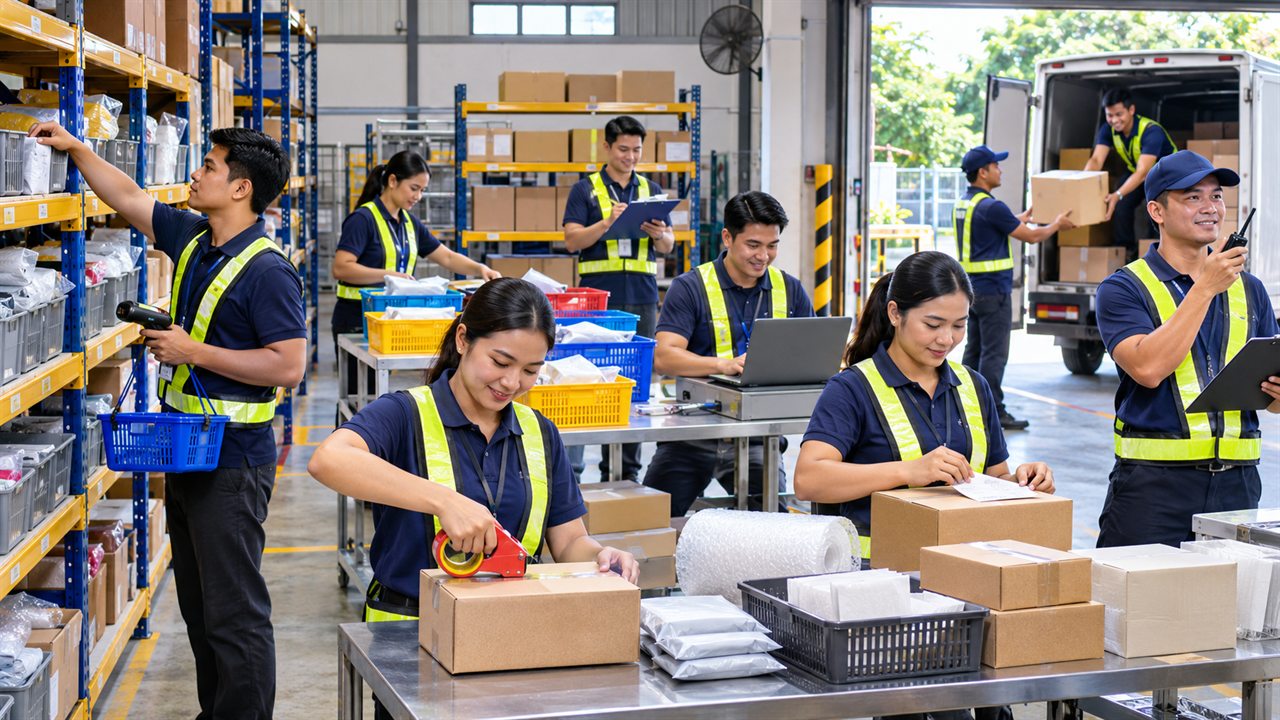
Online orders arrive unevenly and pass through connected stations. Hiring more packers will not solve a bottleneck in picking, replenishment, verification, or dispatch staging.
Map the order journey
Follow an order from release to picking, verification, packing, labeling, sorting, staging, and carrier handover. Record queues, rework, travel, equipment, and system scans at each step. Include returns when they share people or space.
Forecast demand by hour and channel
Use orders, order lines, units, product mix, promotions, campaign days, paydays, cut-off times, and carrier pickup schedules. Average daily volume can hide the two-hour peak that determines whether orders leave on time.
Define the role mix
Pickers
Locate and collect the correct SKU and quantity using the approved method, while protecting product condition and inventory accuracy.
Packers and verifiers
Confirm the order, choose approved packaging, protect items, include required documents, seal correctly, and apply the right shipping label.
Sorters and dispatch support
Group completed parcels by route, carrier, wave, or service level and maintain a traceable handover.
Balance stations instead of staffing in isolation
Calculate required labor minutes at each stage, then compare capacity by time window. Cross-train suitable workers so the team can move between compatible stations when queues change. Keep controlled functions and system permissions separate where required.
Build accuracy into the process
Use barcode scans, location discipline, check digits, weight or quantity checks, controlled labels, exception bins, and supervisor approval for overrides. Measure first-pass accuracy and rework, not only parcels per hour.
Prepare for campaigns and seasonal peaks
Lock forecasts, staffing waves, shift extensions, transport, break plans, packaging supplies, equipment, and carrier capacity early. Train additional workers before the peak rather than during the busiest hour. Article 61 explains high-volume recruitment and ramp-up planning.
Protect workers and product
Design safe walking routes, lifting limits, work heights, lighting, heat controls, housekeeping, and equipment rules. Rotate repetitive work where suitable and provide a clear process for damaged, leaking, restricted, or unidentified items.
Use end-to-end KPIs
Track orders shipped by cut-off, first-pass accuracy, pick and pack productivity, queue age, rework, damages, missing items, carrier rejection, attendance, overtime, and safety findings. Review the full flow so one station does not improve its number by pushing problems downstream.
Frequently asked questions
Which roles are used in e-commerce fulfillment?
Common roles include pickers, verifiers, packers, labelers, sorters, replenishment staff, dispatch support, returns processors, and team leads.
How should fulfillment headcount be calculated?
Forecast hourly orders, lines, and units; convert each process into labor minutes; then add breaks, learning time, rework, absence coverage, and peak buffers.
How can order accuracy improve?
Use disciplined locations, barcode scans, controlled labels, verification rules, exception handling, supervised overrides, and first-pass accuracy reporting.
What KPIs matter most?
Track on-time shipment, first-pass accuracy, station productivity, queue age, rework, damage, shortages, carrier rejection, attendance, overtime, and safety.